A half-day decision workshop for founders, owners and executives. Decide what your company should own, what it can rent, and what it never decided about its intelligence. Leave with a boundary, a ranked list of exposures, and one 90-day first move.
Ready to bring your team? Apply for a seat in our next half-day workshop →
Your customer memory. Your pricing logic. Your proposals, your playbooks, the conversations your people are having with AI tools right now. Most of it sits in software you rent, under terms you have not read, in a place you could not leave if you had to.
Nobody decided that. It drifted there, one renewal and one expense report at a time. Nearly nine in ten organizations now use AI in some part of the business. About four in ten have a formal policy for it. Two-thirds of technology executives say they are accountable for AI they do not fully control.
This is not a workshop about servers. Sovereignty means control over how your intelligence is built, governed, operated and evolved, plus the ability to leave. Some of what you rent is fine to rent. Some of it is the business. The work is knowing which is which.
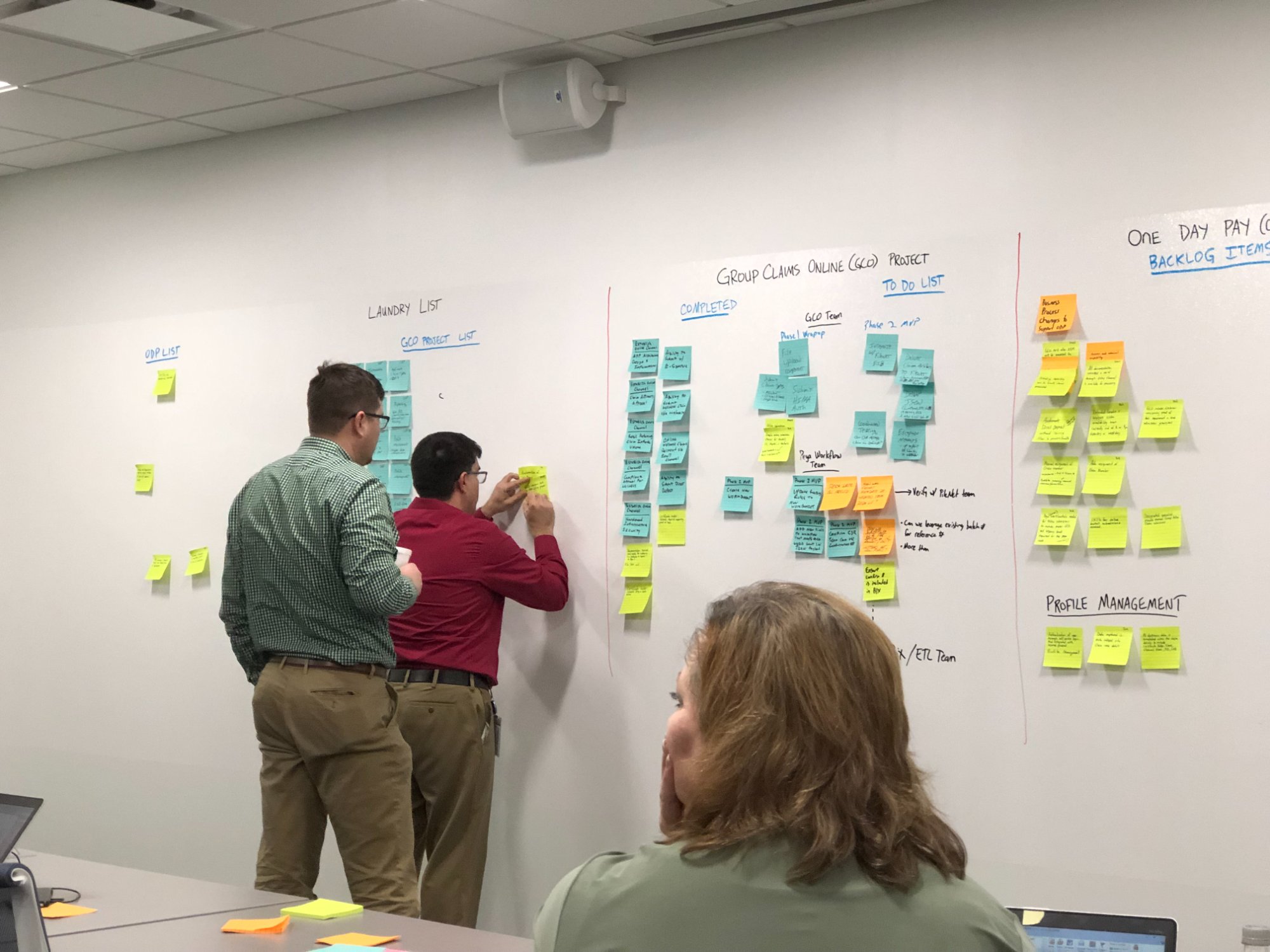
KEYS is built on the Signal & Horizon Ideas to Initiatives to Outcomes framework and compressed to half a day. A short intake before the session does the wide thinking, so the room can spend its time deciding.
One of us has spent decades helping large organizations decide what to build. The other builds the infrastructure that lets a company keep what it decides to own. You get both views, and neither of us is selling you the other's answer.

28 years leading innovation and transformation for Fortune 500 companies, including founding Aflac's innovation lab, Hatch, and leading FPT Software's North American digital transformation practice. Creator of the Ideas to Initiatives to Outcomes framework that KEYS is built on. More about Cory

Keith builds company-owned intelligence hubs. In the room he brings the exposures, the real cases and the reference boundary: what it looks like when a company actually keeps the keys.
The pressure is not hypothetical. It is showing up in renewals, in incident reports, in insurance policies and in state law.
Figures from McKinsey, ISACA, Deloitte, IBM, published vendor and insurer notices, and the Colorado and Texas statutes, checked October 2026. We re-verify the regulatory picture before every session, because it moves.
Keep the Keys sits next to a lot of "AI readiness" offerings. It is not one of them.
If you leave deciding you are fine renting, and you can prove you could leave, that is a win. We would rather you know than guess.
Every participant leaves with a physical document, completed in the room, in their own handwriting. Four pages, one course.
Half a day is enough when the wide thinking happens first. The intake does the diverging; the room does the converging.
Every format runs the KEYS logic. What changes is who is in the room and how deep each movement goes.
The horizon will keep shifting and the tools will keep changing. What must endure is your ability to decide, with clarity, what is worth keeping.
Cohorts are 8 to 14 companies, grouped by sector where possible.
Start with the free one-hour live session on LinkedIn and leave with your own Estate Map Readout. The half-day workshop is the next step: a half day where your leadership team puts your company on the table, in a cohort or a private session.