The Engagement Model

What We Do

Four ways we engage. Most clients move through more than one. Every engagement is operator-led, tool-neutral, and built around the decisions that actually matter.
Categories
Four
Engagements
Eleven
Posture
Operator-led
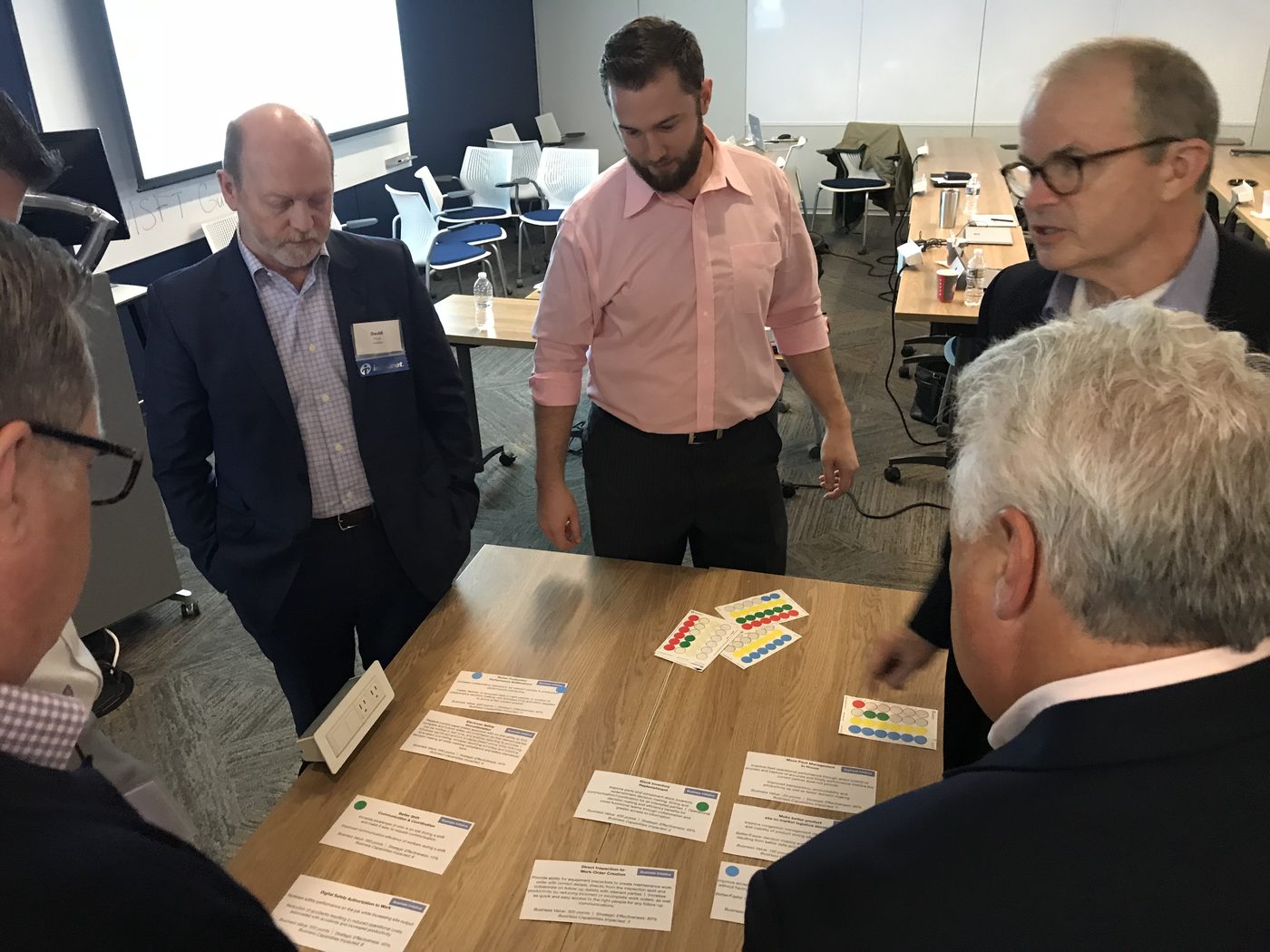
Signal & Horizon operators working through prioritization with an enterprise client team
How To Read This Page

We don’t organize our work by format. We organize it by what you’re trying to do.

The Engagement Model
Most firms list their services by what they sell. We list ours by what you’re trying to decide. A single engagement may touch all four categories, or only one. The right path is set in discovery — not on this page, and not in a sales conversation.
Four categories. Eleven engagements. One operator-led firm.

Every offering below is a real engagement we deliver. None of it is a do-it-yourself playbook, an AI-generated framework, or a slide deck for purchase. We work directly with executive teams, in the room, on the questions that actually matter to your business.

01
Get to clarity
When the question itself isn’t clear yet
For leaders carrying a decision that hasn’t resolved — where the right question is still forming and the right altitude hasn’t been found. The work here is reframing, not solving. Before you can answer well, you have to be sure you’re asking the right thing — and that the team around you sees it the same way.
Who this is for
Executives and leadership teams stuck between competing priorities, holding a decision that keeps resurfacing, or feeling that the team is operating at the wrong altitude. The challenge isn’t lack of information — it’s lack of structured clarity about what to actually decide.
When to come here first
When the conversations keep circling. When the team is moving fast but not converging. When you’ve had three meetings about the same question and still can’t name what you’re trying to decide. Start here — before you spend another quarter optimizing the wrong thing.
02
Build the foundation
Before you scale, get the ground right
For organizations about to invest in AI at scale — or already mid-flight and uncertain whether the foundation can hold. Honest baselines and governance designed for enterprise reality, not vendor pitch decks. The work here protects the next twelve months of investment from the next six months of mistakes.
Who this is for
CIOs, CTOs, Chief AI Officers, Chief Strategy Officers, and innovation leaders preparing to scale — or recovering from the realization that the first wave of AI investment didn’t produce what was promised. The need isn’t more strategy. It’s an honest read on where you actually stand.
When to come here first
Before you commit eight figures to an AI platform. Before you stand up an AI governance committee that may or may not have teeth. Before your board asks the question you can’t answer with confidence. The foundation work is cheap compared to the cost of building on the wrong ground.
03
Make the hard calls
The decisions leaders defer until someone else makes them
For executive teams confronting what AI is making obsolete, what to defend, and what to retire — in their own business, with their own team, in the room. Plus the ongoing relationship that helps you keep making those calls well after the first conversation. This is the work most firms won’t do, because it requires telling clients things they don’t want to hear.
Who this is for
C-suite teams facing a strategic inflection — pricing pressure, a new entrant, a board question that won’t resolve, or the slow recognition that the business model is shifting underneath them. The need is honest confrontation, not another optimistic strategy session.
When to come here first
When you suspect the question the team has been avoiding is the one that matters most. When the executive team is misaligned but won’t say so. When your board has started asking about AI strategy and you’d rather get ahead of that conversation than be cornered by it.
04
Move from strategy to motion
The decisive work between intent and execution
For organizations that have plenty of strategy but can’t translate it into the specific decisions and moves that make it real. Operator-led engagements that take a strategic question off the page and produce a tactical outcome your team can act on. This is the work that bridges the gap where most strategies die — the seam between deciding and doing.
Who this is for
Leaders whose teams can think strategically but stall when it comes to translation: who owns what, what changes Monday, what the operating model looks like with AI inside it. The need isn’t more strategy — it’s specific, written, executable answers to the questions strategy keeps producing.
When to come here first
When the strategy is set but the operating model isn’t. When the executive team has aligned but the middle layer is unclear on what’s actually changing. When you have a Lighthouse pilot greenlit and you need to be sure the data, the workflow, and the org math actually hold up before you build.

What this isn’t.

This isn’t a service menu, a productized framework, or a do-it-yourself playbook. The page is organized this way because that’s how the work fits together — not because we want you to shop it.

We don’t sell modules. We sell judgment, applied — brought into your business by senior operators who’ve made the decisions you’re facing and can tell you, in the open, what the trade-offs actually are.

What it is.

An operator-led firm with eleven named engagements and a clear philosophy: clearer thinking leads to better decisions and more intentional outcomes. The category labels above are honest descriptions of buyer intent, not marketing categories.

Every engagement is real. Every deliverable is written. Every commitment is owned by name. The work is built to be acted on, not filed.

How They Fit Together

One firm. Multiple entry points. Every engagement compounds.

A client may walk in through any door — a 90-minute Executive Reframe, a half-day OBSOLESCENCE working session, a multi-week Strategy Sprint. What follows is decided together, in the open, based on what the work actually requires.

A typical sequence we see: an Executive Reframe surfaces a question that the executive team can’t resolve alone. That question becomes an OBSOLESCENCE working session for the senior team. The commitments from OBSOLESCENCE require an Operating Model Design and a Data Readiness Read before execution begins. The whole motion is held together by an ongoing Strategic Advisory relationship that helps leadership keep making the calls well, six months in.

None of this is sold as a package. Each engagement is scoped, named, and committed to on its own merits. But the work compounds — and the client who’s engaged with us across categories has a different operating posture than the one who engaged us once.

01  ·  Our Posture
Operator-led
Our perspective comes from decades of leading enterprise transformation, not from analyzing it. We’ve made the decisions you’re facing. We know what the pressure feels like.
02  ·  Our Stance
Tool-neutral
No platform to sell. No vendor relationships to protect. No financial incentive to recommend any particular technology. The quality of your decision is the product.
03  ·  Our Fluency
Governance-grade
For regulated industries, governance isn’t theoretical — it’s the entire conversation. We operate fluently in both the innovation and the accountability realities of the modern enterprise.
Common Questions

The questions serious buyers ask before the first call.

How do we know which category to start in?
You don’t need to. Most clients arrive with a specific question or situation. We listen, ask a few honest questions back, and tell you in the first conversation whether and how we can help — including telling you when the right answer is to come back in six months, or work with a different firm entirely.
Can we engage across multiple categories at once?
Yes, and most substantial engagements do. A client confronting an operating model decision (Category 4) often needs the foundation work (Category 2) running in parallel. We’ll tell you what we’d sequence and why — based on what produces the most signal for your team in the least disruptive shape.
What does discovery actually look like?
Brief. Honest. Usually 30–45 minutes. We’ll ask what you’re navigating, what’s already been tried, and what would be true in six months if the engagement worked. No discovery decks, no preliminary scoping documents that turn into invoices. The first conversation is free, and the second one tells us both whether to keep going.
Do you publish pricing?
No. Engagements vary too widely in scope, depth, and duration for fixed pricing to be honest. Every engagement is scoped after discovery, with the cost named in writing before any work begins. We do not sell on hourly rates and we do not deliver work whose price is set by the size of the firm rather than the value of the outcome.
Why operator-led, not analyst-led?
Because the people doing this work have run enterprise transformations, not just analyzed them. That shows up in how we facilitate sessions, in how we handle pushback, and in the moments when a senior leader says “we can’t actually do that.” Different conversation. Different outcomes.
What if we already have a strategy consultant?
Most of our best clients do. We don’t replace strategy firms — we operate at a different layer. They handle market posture, competitive strategy, and corporate-level decisions. We work the seam between strategy and execution, the operating model, and the decisions that get deferred. The two roles complement each other; we’ve never asked a client to fire their strategy firm.
Start a Conversation

The right engagement begins with the right conversation.

Signal & Horizon takes on a small number of clients at any given time — by design.

No sales funnel. No pitch deck. Tell us what you're navigating and we'll tell you honestly whether and how we can help.

[email protected]

No sales funnel. No automated follow-up sequence. A real conversation.