Innovation Workshop

The IIO Workshop

Ideas to Initiatives to Outcomes

A structured approach to turning complex business challenges into clear intent, prioritized outcomes, and an actionable solution path — assembled from the right ingredients for each unique situation.
Format
Sprint to multi-day engagement
Audience
Enterprise teams & leadership groups
Participants
6 – 30
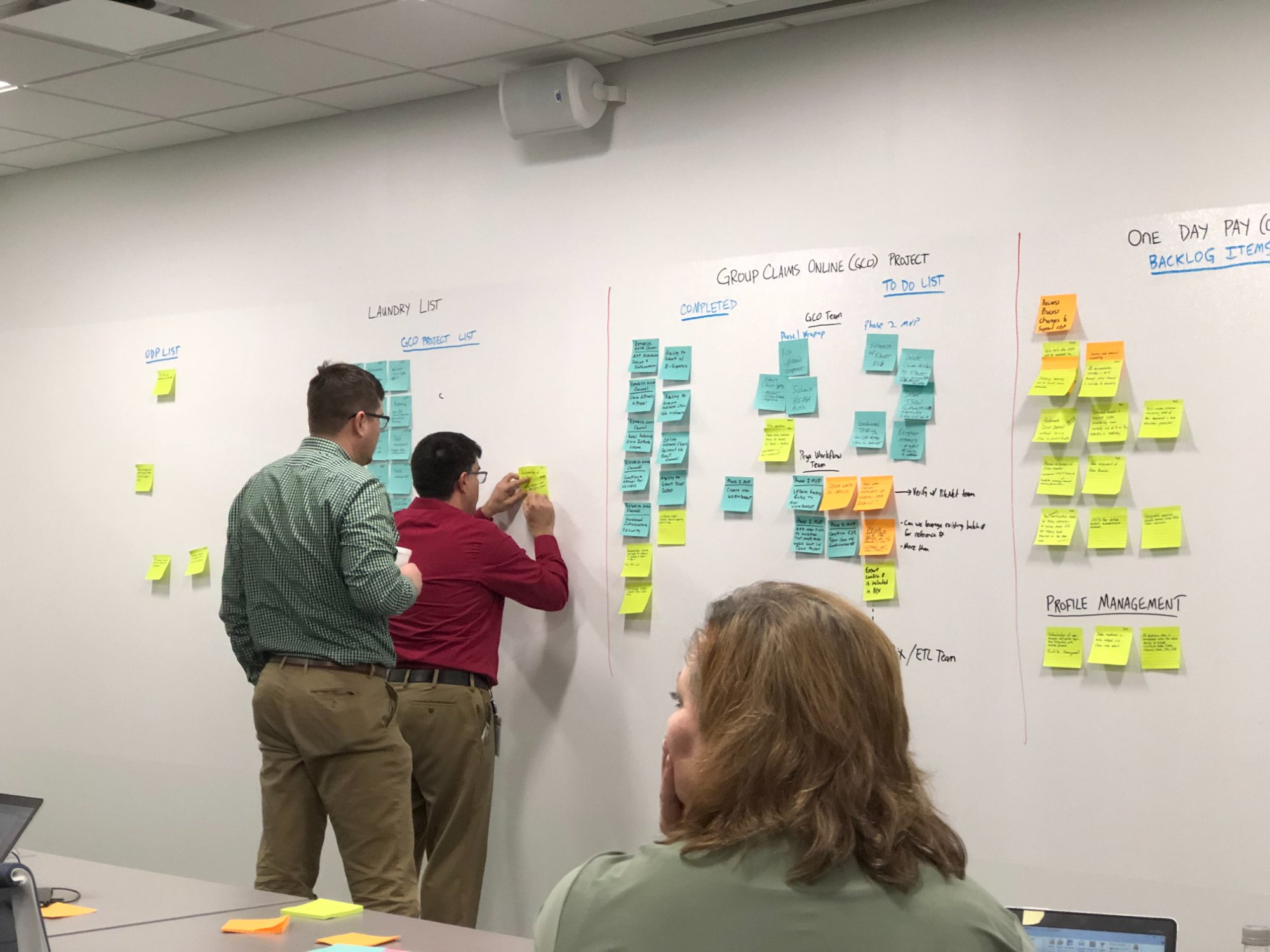
Team placing sticky notes on a prioritization wall
The philosophy

Ingredients & Recipes

Every organization is different. Every challenge is unique. The team in the room, the problem on the table, the pressure driving the engagement — none of it is the same twice.

That's why the IIO Workshop doesn't follow a single methodology. It draws from a tested library of facilitation techniques, frameworks, and exercises — and assembles the right combination for the specific situation. Think of it less like a fixed process and more like a skilled chef working with quality ingredients: the recipe changes, but the craft and the outcome don't.

Ingredients & Recipes
No two challenges are the same — so no two workshops should be either.
We select the right ingredients for your situation and assemble a recipe that actually works. The operating philosophy behind every IIO Workshop.

The IIO framework provides the structure — Intent, Identify, Operationalize — while the methodology stack provides the flexibility. Design Thinking, Lean MVP principles, Luma CX techniques, Impact Mapping, Importance/Difficulty matrices, and more are selected and combined based on what the challenge actually requires. The framework is consistent. The execution is always tailored.

The framework

Intent. Identify. Operationalize.

The IIO framework moves through three phases, each building on the last. Every engagement runs this logic — regardless of duration, team size, or challenge type. What changes is the depth, the activities, and the specific tools deployed within each phase.

Phase I
Intent
Define & align
Expose the real problem and define what success looks like. Establish shared intent, surface desired business outcomes, and align the team on what we're actually trying to achieve — before any solutioning begins.
Phase II
Identify
Diverge & converge
Generate possibilities, surface constraints, and distill what matters most. Use structured diverge/converge cycles to move from raw outcomes to prioritized, impactful opportunities — grounded in the business reality in the room.
Phase III
Operationalize
Validate & activate
Translate prioritized outcomes into an actionable path forward. Validate assumptions, assign ownership, and produce a concrete deliverable — a roadmap, backlog, or solution proposal — that teams can immediately activate.
Challengeas stated
Outcomesprioritized
Solutionactivated
The ingredients

The Methodology Stack

The IIO Workshop draws from a proven library of facilitation techniques and frameworks. The right combination is selected before each engagement based on the challenge, the team, and what the situation actually requires.

Design Thinking
Human-centered problem framing and ideation. Used to surface real user needs, challenge assumptions, and generate creative solution directions before converging.
Lean MVP Principles
Build the minimum to learn the maximum. Keeps teams focused on validating assumptions quickly rather than over-engineering solutions before the problem is fully understood.
Luma CX Techniques
A curated set of human-centered design activities — including Rose/Bud/Thorn, Affinity Clustering, and Statement Starters — that structure collaborative thinking and surface shared insight.
Impact Mapping
A strategic planning technique that aligns activities to outcomes by mapping goals → actors → impacts → deliverables. Prevents teams from building things that don't move the needle.
Importance / Difficulty Matrix
A visual prioritization tool that rates opportunities by combined importance and difficulty — surfacing quick wins, strategic bets, and low-value distractions with clarity.
Assumption Mapping
Identifies which backlog items carry known value and which rest on unvalidated assumptions — so teams can prioritize with confidence and avoid investing in ideas that haven't been tested.

Additional techniques — drawn from agile delivery, systems thinking, Jobs to be Done, and organizational design — are selected for each engagement. The philosophy is consistent. The execution is always tailored.

Positioning

What This Is — and What It Isn't

The IIO Workshop is often mistaken for a requirements gathering session, an agile ceremony, or a generic ideation exercise. It's none of those things.

This is not
A requirements gathering session
A generic brainstorming exercise
A fixed process applied to every team
A one-size-fits-all methodology
A session that produces a wish list
This is
Structured facilitation grounded in business reality
A tailored approach built for the specific challenge
Diverge/converge thinking with discipline
Outcome-driven, not activity-driven
A session that produces something actionable
What teams experience

What Teams Take Away

Every IIO Workshop produces something concrete. Not notes, not a slide deck — a tangible deliverable that teams can hand off, prioritize from, and immediately activate.

Shared intent and aligned outcomes
A clearly defined statement of intent and a set of agreed desired business outcomes — so the team is solving the same problem from the same starting point.
Prioritized opportunities
A distilled, prioritized view of what matters most — grounded in impact, difficulty, and business value. Not everything, but the right things in the right order.
Validated assumptions
Key assumptions surfaced, stress-tested, and either confirmed or flagged for investigation — so the team moves forward with confidence rather than hope.
An actionable deliverable
A strategic roadmap, a backlog of epics, or a solution proposal — scoped to the engagement, assigned to owners, and ready to activate the moment the session ends.
What gets produced

The Deliverables

The specific deliverable is scoped to the engagement. Every format produces something that can be immediately handed to a team or taken into a board conversation.

01
Strategic roadmap
A documented North Star with clear feature and function requirements, desired business outcomes, and a prioritized path from MVP to full delivery. Provides rollup reporting in the language the organization already uses.
02
Backlog of epics
A prioritized set of epics distilled into user stories that agile teams can immediately activate. Each item is assigned, scoped, and tied back to the business outcomes defined in Phase I.
03
Solution proposal
A comprehensive end-to-end solution brief identifying capability gaps, resource requirements, and a clear path forward — developed collaboratively with the team in the room.
Delivery

Formats

Every format runs the IIO logic. Duration determines how deep each phase goes — not whether the framework is applied in full.

Discovery sprint
1 day · 6–15 participants
Compressed IIO run for teams that need to define intent and surface priorities quickly. Produces a clear problem statement and a prioritized opportunity list.
2-day workshop
2 days · 8–20 participants
The standard engagement. Full IIO flow across all three phases with time for deep prioritization. Produces a roadmap or backlog ready for team activation.
3-day intensive
3 days · 10–30 participants
Extended engagement with cross-functional breakouts, assumption mapping, and full solution proposal development. Suited to complex, multi-team challenges.
Executive alignment session
Half day · 6–12 participants
Compressed Intent phase for senior leadership. Establishes shared business intent and desired outcomes before a larger team engagement begins.
AI & innovation sprint
1–2 days
IIO tailored for AI adoption and emerging technology challenges. Includes use-case mapping, readiness assessment, and prioritized implementation path.

The right methodology for the wrong problem is still the wrong answer. We start with your situation — then assemble the recipe.

Book a Workshop

Most teams don't fail because they lack ideas. They fail because they never aligned on the right problem.

Signal & Horizon takes on a small number of engagements at any given time — by design.

If your team is moving fast but not converging — or if you're heading into a critical initiative and need to get aligned before you build — the IIO Workshop is designed for exactly that moment. One focused engagement. A clear output your team can immediately act on. Reach out to talk through whether it's the right fit.

No sales funnel. No automated follow-up. A real conversation.