Leadership Framework

ALTITUDE

A leadership framework in three acts. Gain perspective. Read complexity. Return to action with greater clarity and decision quality.
Format
Executive briefing to full-day offsite
Audience
Senior enterprise leaders
Group size
4 – 20 participants
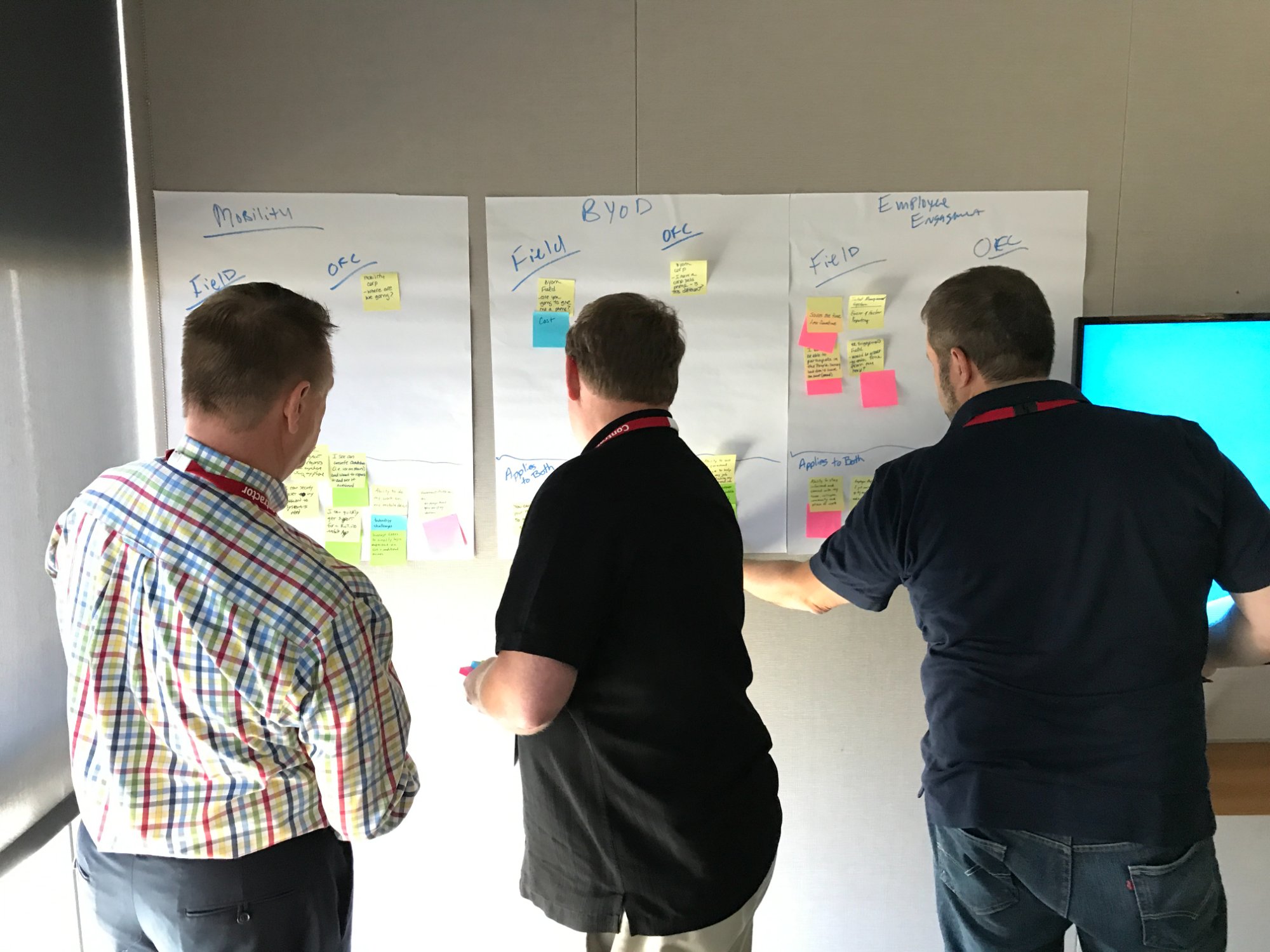
Leaders working together at a whiteboard
The philosophy

Why Altitude Changes Everything

Most leadership challenges aren't hard because they're complicated. They're hard because leaders are trying to solve them from the wrong altitude.

Too low, and the problem looks tactical — a decision to make, a process to fix, a person to manage. Too high, and it becomes abstract — a strategy conversation that never connects to what's actually true on the ground. Either way, the result is the same: movement without clarity.

ALTITUDE is a leadership framework built around a single idea: the quality of your decision is determined before you make it — by where you're standing when you look at the problem.

The Altitude Principle
Every challenge looks different depending on where you're standing. Before you move, find the right altitude.
The operating principle behind the ALTITUDE framework.

This is why ALTITUDE doesn't follow a linear problem-solving process. Different leaders start at different heights. Different challenges require different vantage points. The framework moves through three deliberate acts — each one shifting the group's altitude — always in service of one outcome: reaching the place where the right decision becomes visible.

The framework

Three Acts. One Direction.

ALTITUDE moves through three acts, each shifting the group's altitude. The sequence is consistent. The instruments within each act are selected for the specific challenge and the specific people in the room.

Act I
Lift
Break from reactive patterns. Create deliberate separation from urgency and ground-level noise.
Surface
Name the assumptions running the show. Excavate the mental models that have never been examined.
Separate
Create distance from urgency. The problem doesn't disappear — your relationship to it changes.
Shift
Move from reactive posture to observational posture. You're no longer inside the problem. You're above it.
Act II
Horizon
See the full terrain. Read what's actually true from a vantage point ground-level thinking can't reach.
Scan
Take in the full landscape. Competing priorities, hidden dependencies, what's driving what.
Signal
Separate signal from noise. At altitude, patterns emerge. What looked like chaos from the ground has structure.
See
Name what's actually true. Not what you hoped, not what the data was curated to show. What the full terrain reveals.
Act III
Ground
Return with new vision. Translate elevated perspective into intent, decisions, and a different leadership posture.
Reframe
Bring the elevated view back into the problem. The question you walked in with may not be the right question anymore.
Resolve
Make the decisions the clarity enables. You didn't come here for insight tourism. You came to decide better.
Return
Go back into the organization changed. Not with a slide deck of outputs — with a different leadership posture.
Reactiveground level
Elevatedfull terrain
Groundedchanged posture
How it works in the room

The Instruments

No single technique works in every room. ALTITUDE draws from a range of facilitation instruments — selected before each engagement based on where the group is likely to be stuck and what altitude shift is required.

The Altitude Question
Opens the session by surfacing not just the challenge, but the altitude at which each leader is holding it — revealing the gap between tactical framing and strategic reality.
Assumption Surfacing
Makes the invisible visible. Identifies what has to be true for the current frame to be correct — then tests whether it actually is.
Cognitive Range Expansion
Structured provocations that interrupt default thinking patterns. Designed to widen the aperture before the group converges on a direction.
The Clarity Matrix
Maps challenges by Impact and Clarity — separating what should be acted on now from what needs deliberate investigation before anyone moves.
The Opposite Test
Challenges the group to argue convincingly for the opposing position — surfacing blind spots and stress-testing the eventual direction before committing to it.
The Intent Statement
A structured reflection capturing the shift: what the leader believed before, what they now see, and the decision they'll approach differently going forward.

Additional instruments — drawn from behavioral science, systems thinking, design thinking, and leadership research — are selected for each engagement. The philosophy is consistent. The execution is always tailored.

Positioning

What ALTITUDE Is — and What It Isn't

This work is often mistaken for leadership development, executive coaching, or facilitated strategy sessions. It's none of those things.

This is not
Leadership training or coaching
Wellness or mindfulness programming
Trend-driven transformation content
A fixed methodology applied to every group
A session that produces a slide deck
This is
Decision-quality infrastructure for leaders
Structured facilitation grounded in reality
An environment designed for clearer thinking
Tailored to the specific group and challenge
A session that produces a changed orientation
What leaders experience

What Leaders Take Away

Clarity isn't just a feeling. It shows up in how leaders talk about challenges, how they frame decisions, and how confidently they move when the path isn't obvious. ALTITUDE produces measurable shifts in all three.

Sharper strategic framing
Leaders leave with a more accurate understanding of the challenge they're actually facing — not just the one they walked in with.
Greater comfort with uncertainty
Not false confidence — but the ability to act deliberately even when the picture is incomplete.
Reduced reactive decision-making
A clear separation between what demands immediate action and what deserves patient, deliberate thought — and the discipline to honor that distinction.
A session artifact they can use
A two-page document capturing what shifted: the reframed challenge, the signal items, and individual intent statements. Designed to be shared upward.
Delivery

Formats

Every format runs the same three-act logic. Time compression determines which instruments are deployed within each act — not what gets cut from the framework.

Executive briefing
90 min · 4–8 participants
A compressed version suited to leadership teams that need a shared reframe on a specific challenge. Moves fast, lands precisely.
Half-day workshop
4 hours · 8–16 participants
The standard engagement. Full four-phase flow with time for depth in the reframe. Produces the most complete session artifact.
Full-day offsite
6–8 hours · up to 20
Extended engagement with breakout work and deeper integration. Suited to teams navigating significant change or leadership misalignment.
Private clarity session
60–90 min · 1 executive
A 1:1 diagnostic conversation. The framework guides the facilitator invisibly. Produces one reframed question and one committed intent.
Innovation council
Half or full day
Tailored for AI adoption, governance, and transformation leadership groups navigating complexity under executive or board pressure.
Bring ALTITUDE to Your Team

The next leadership advantage isn't moving faster. It's seeing more clearly.

Signal & Horizon takes on a small number of engagements at any given time — by design.

Leaders who've been through ALTITUDE don't describe it as a workshop. They describe it as the moment the challenge finally made sense at the right altitude. If you're navigating a decision that matters — or a team stuck thinking about it from the wrong level — reach out. The conversation starts here.

No sales funnel. No automated follow-up. A real conversation.